Industrial Castings
Industrial manufacturing encompasses one of the broadest and most demanding ranges of application requirements in any sector. From pumps and valves handling corrosive process fluids to food processing equipment operating under strict hygiene standards, from heavy equipment components subjected to extreme mechanical loads to precision instrumentation requiring tight dimensional tolerances — the industrial sector demands manufacturing solutions that can deliver performance, reliability, and cost-effectiveness across an exceptionally diverse set of applications.
Investment casting has been a trusted manufacturing process for industrial applications for generations. Its combination of geometric flexibility, dimensional precision, broad material capability, and near-net shape production makes it uniquely suited to the complex, high-performance components that industrial equipment manufacturers require. Engineered Precision Casting Company has over 70 years of experience producing precision investment castings for industrial customers across a wide range of markets and applications.
Why Investment Casting for Industrial Applications?
Industrial equipment manufacturers choose investment casting for components where the economics, performance, and design freedom of the process provide clear advantages over alternative manufacturing methods:
Near-net shape production — Investment casting produces components close to their final dimensions, significantly reducing machining time and material waste on expensive alloys. For industrial components produced in moderate to high volumes, the reduction in machining cost that investment casting provides relative to producing the same geometry from bar or plate stock can be substantial, often offsetting the tooling investment within a relatively small number of parts.
Design freedom — Investment casting allows designers to incorporate features that would be impossible or prohibitively expensive to produce by machining or fabrication, including complex internal passages, undercuts, thin walls, and organic contoured surfaces. This design freedom allows industrial equipment to be optimized for function and performance rather than being constrained by the limitations of the manufacturing process.
Material versatility — Industrial applications span the full range of engineering alloy families, and investment casting is compatible with virtually all of them. Whether the application requires the corrosion resistance of austenitic stainless steel, the wear resistance of a cobalt-base alloy, the strength of a precipitation hardening grade, or the high-temperature performance of a nickel-base superalloy, investment casting can deliver the required material in the required geometry.
Part consolidation — Complex industrial components that would otherwise require multiple machined parts assembled by welding, brazing, or mechanical fastening can frequently be produced as single investment castings. Eliminating joints and fasteners reduces assembly time, improves dimensional consistency, and removes potential failure points from components operating in demanding service environments.
Consistent quality — Investment casting produces consistent, repeatable results from part to part and lot to lot, which is essential for industrial equipment manufacturers who require interchangeable parts and predictable performance across production runs. Our master heat system and in-house quality management infrastructure ensure consistent material chemistry and mechanical properties across all pours.
Scalability — The investment casting process scales efficiently from prototype quantities through high-volume production, making it a practical solution for industrial components at every stage of product development and production lifecycle. A casting that begins as a prototype can progress to full production without tooling changes or process modifications, preserving the design integrity of the component throughout its production history.
Industrial Applications
Investment castings serve critical functions across a broad range of industrial markets and equipment categories. The following sections describe the primary application areas where investment casting provides particular value to industrial equipment manufacturers.
Pumps and Fluid Handling Equipment
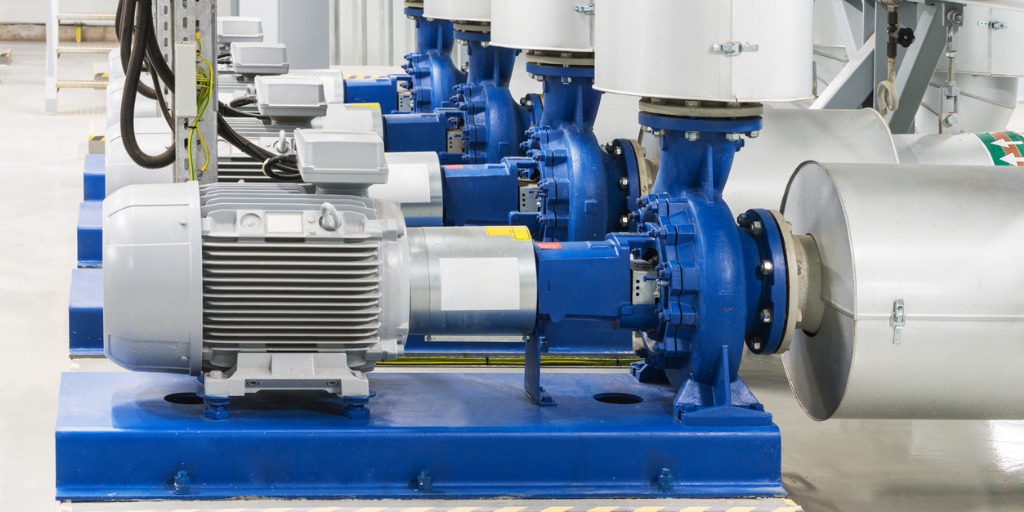
Pumps are among the most widely produced investment castings in the industrial sector. Centrifugal pump impellers, casings, wear rings, diffusers, and mechanical seal housings are all commonly produced as investment castings, taking advantage of the process's ability to produce the complex curved geometries of hydraulic components to precise dimensional tolerances that directly affect pump efficiency and performance.
Material selection for pump investment castings is driven by the nature of the fluid being handled. Austenitic stainless steel grades including 316-L and 347 are the standard materials for pumps handling corrosive process fluids, providing reliable resistance to a broad range of acids, alkalis, and chloride-containing solutions. For pumps handling highly abrasive slurries or erosive fluids, cobalt-base alloy investment castings — particularly Cobalt #6 and Cobalt #21 — provide wear and erosion resistance that dramatically extends service life compared to stainless steel alternatives. Precipitation hardening stainless steel grades including 17-4 PH and 15-5 PH are specified where high strength must be combined with corrosion resistance, particularly for high-pressure pump components and shafting.
The investment casting process is especially well suited to producing pump impellers, where the complex three-dimensional blade geometry and tight dimensional tolerances required for hydraulic performance would be extremely difficult and expensive to achieve by machining from solid stock. Investment cast impellers in the appropriate alloy can be produced to near-hydraulic tolerances in the as-cast condition, minimizing the secondary machining required to achieve the surface finish and dimensional accuracy needed for efficient pump operation.
Valves and Flow Control
Industrial valves — including gate valves, globe valves, ball valves, butterfly valves, check valves, and pressure relief valves — rely extensively on investment castings for bodies, bonnets, seats, stems, and trim components. The valve industry is one of the largest consumers of investment castings globally, and for good reason: valve geometries are inherently complex, materials requirements are demanding, and dimensional precision is critical for pressure integrity and reliable sealing.
Stainless steel investment castings dominate the industrial valve market. Austenitic grades including 304, 316-L, and 347 are specified for general-purpose corrosion-resistant valve service, while martensitic grades including 410 and 420C are used for valve stems and structural components requiring higher hardness and strength. For the most demanding valve applications — including high-velocity erosive service, high-temperature process streams, and applications involving frequent cycling under high differential pressure — cobalt-base alloy investment castings provide the combination of wear resistance, corrosion resistance, and high-temperature strength that no stainless steel grade can match. Cobalt #6 is the industry standard material for valve seats and trim in severe service, and its investment casting in complex seat geometries allows this difficult-to-machine alloy to be produced close to final dimensions with minimal secondary processing.
Food and Dairy Processing Equipment
The food and dairy processing industry imposes stringent requirements on the materials and surfaces of equipment that comes into contact with food products. Components must be produced in materials that are non-toxic, non-contaminating, and resistant to the aggressive cleaning and sanitization chemicals used in food processing environments, and surfaces must be smooth, crevice-free, and free of features that could harbor bacteria or prevent complete drainage and cleaning.
Investment casting in 316-L stainless steel is the standard manufacturing approach for food contact components in pumps, valves, fillers, mixers, conveyors, and processing vessels. The low-carbon content of 316-L prevents sensitization during welding and provides good resistance to the chloride-based sanitizers commonly used in food processing. The excellent surface finish achievable in the as-cast condition — typically 125 RMS or better — meets the requirements of most food processing equipment standards without additional polishing, and the smooth, dense surface of investment castings resists bacterial adhesion and is easily cleaned by standard clean-in-place (CIP) and steam-in-place (SIP) procedures.
The investment casting process is particularly well suited to food processing applications because it produces crevice-free external surfaces and the ability to incorporate drainage features, smooth internal passages, and hygienic geometries directly in the casting. Components that would require multiple fabricated parts with welded joints — potential harboring points for bacteria and difficult to clean thoroughly — can be produced as single investment castings with smooth, fully accessible surfaces.
Chemical and Petrochemical Processing
Chemical and petrochemical plants process a wide range of corrosive feedstocks, intermediates, and products at elevated temperatures and pressures, requiring materials and components that can withstand years of continuous exposure to aggressive process environments without degradation. Investment castings in high-alloy stainless steels, cobalt-base alloys, and nickel-base alloys serve critical functions in reactors, heat exchangers, distillation systems, and the pumps and valves that control process flows throughout these facilities.
Austenitic stainless steels — particularly 316-L, 310, and 347 — are the workhorses of chemical process investment castings. Grade 310 is specified where elevated operating temperatures require resistance to high-temperature oxidation and scaling, while 347 provides improved resistance to intergranular corrosion in applications involving thermal cycling. For the most aggressive chemical environments — including strong mineral acids, halogenated solvents, and oxidizing media that attack standard stainless steels — cobalt-base and nickel-base alloy investment castings provide the chemical resistance that the application demands. Monel M35-1 is specified for components in hydrofluoric acid service, where its exceptional resistance to HF acid makes it the material of choice in alkylation unit hardware.
Agricultural and Heavy Equipment
Agricultural equipment and heavy construction machinery subject components to demanding combinations of mechanical loading, abrasive wear from soil and aggregate contact, and exposure to outdoor corrosion environments. Investment castings in carbon and low-alloy steels are used extensively in agricultural equipment for brackets, links, hinges, wear parts, and structural fittings that must combine high strength with good toughness and resistance to impact loading.
Medium carbon steel grades including 1040 and 1045, and alloy steel grades including 4130 and 4140, are investment cast for agricultural and heavy equipment components where the complexity of the geometry makes machining from solid stock impractical and the production volumes are too moderate for die casting or large-scale sand casting. The investment casting process allows agricultural equipment manufacturers to produce complex, near-net shape components in appropriate engineering steels at competitive cost, with the dimensional consistency required for interchangeable replacement parts in field service.
Power Generation
Power generation equipment — including steam turbines, gas turbines, generators, and associated balance-of-plant systems — relies on investment castings for a range of critical components that must maintain performance and dimensional integrity across decades of continuous service. Investment cast stainless steel components are used in steam turbine nozzle blocks, diaphragms, and valve bodies where the combination of corrosion resistance, dimensional precision, and pressure integrity that investment casting provides is essential.
For gas turbine components in industrial power generation applications, cobalt-base superalloys including Cobalt #25 (L-605) and FSX-414 are investment cast for combustion hardware, nozzle vanes, and transition pieces that must withstand sustained operation at temperatures approaching the limits of metallic materials. Hastelloy X is specified for combustor components requiring the combination of high-temperature oxidation resistance and fabricability that makes it one of the most widely used nickel-base alloys in industrial gas turbine service. The investment casting process is ideally suited to gas turbine hot section components, producing the complex aerodynamic profiles and internal cooling features of nozzle vanes and combustor components in superalloy materials that would be extremely difficult to produce by any other manufacturing method.
Alloy Selection for Industrial Investment Castings
Selecting the right alloy for an industrial investment casting requires balancing the corrosion, wear, temperature, and mechanical requirements of the specific application against cost, availability, and manufacturability considerations. Engineered Precision Casting Company pours over 75 ferrous and non-ferrous air-melt alloys and has the metallurgical expertise to help customers identify the most appropriate material for their application.
Contact us to discuss your industrial investment casting requirements, request a quote, or discuss alloy selection for your specific application.
AS9100 Registered Aerospace Quality System. NADCAP approved for Nondestructive Testing, Welding, Heat Treating and Hardness Testing