Oil & Gas
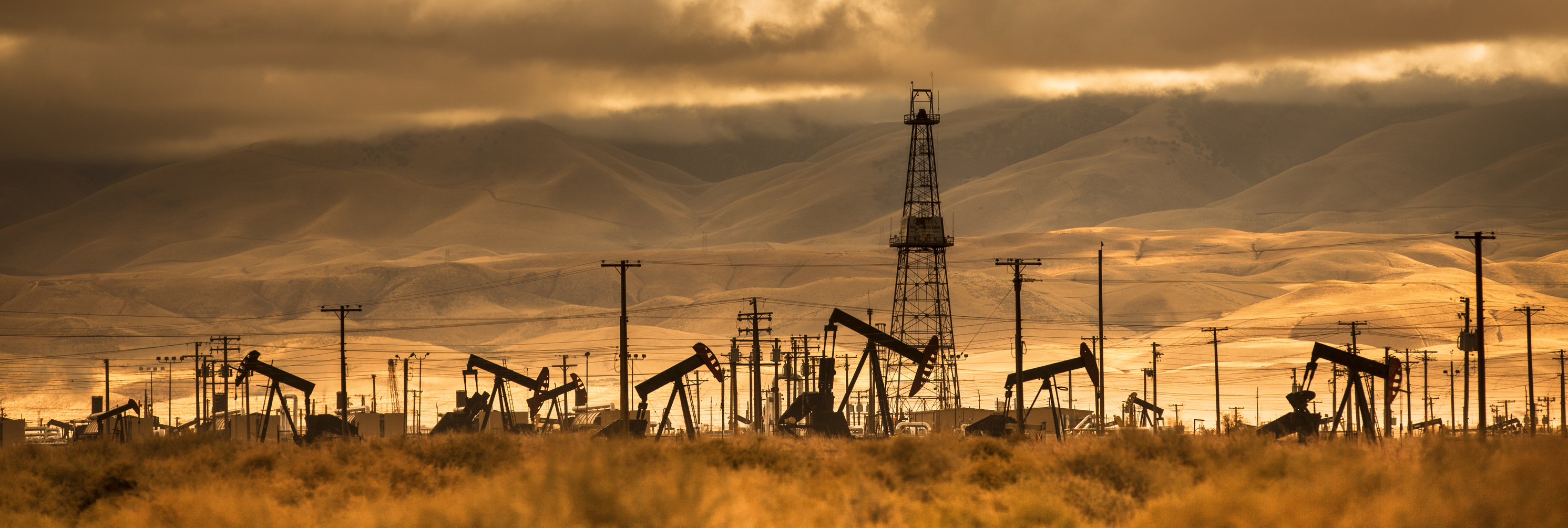
The oil and gas industry operates in some of the most demanding and unforgiving environments on earth. Downhole tools, wellhead equipment, valve assemblies, pump components, and pipeline hardware must perform reliably under extreme pressures, highly corrosive fluids, elevated temperatures, and continuous mechanical wear — often in remote locations where maintenance access is limited or impossible. Component failure in these environments carries consequences far beyond the cost of the part itself, making material selection and manufacturing quality critical decisions.
Investment casting has long been a preferred manufacturing process for oil and gas components that demand complex geometry, tight tolerances, and uncompromising material performance. Engineered Precision Casting Company has over 80 years of experience producing precision investment castings for demanding industrial applications. We are AS9100 registered and NADCAP approved, with a broad alloy capability spanning stainless steel, cobalt-base alloys, nickel-base alloys, carbon and alloy steels, and more.
Why Investment Casting for Oil and Gas?
The oil and gas industry presents a unique combination of requirements that make investment casting an ideal manufacturing solution:
Corrosion resistance in aggressive media — Oil and gas production environments expose components to hydrogen sulfide, carbon dioxide, chlorides, hydrofluoric acid, and a range of other highly corrosive substances. Investment casting allows alloys specifically engineered for these environments — including high-alloy stainless steels, cobalt-base alloys, and Monel — to be cast into complex shapes without the material property compromises that can result from welding or extensive machining.
High-pressure performance — Wellhead equipment, valve bodies, and subsurface tools must maintain pressure integrity under thousands of pounds per square inch. Investment casting produces components with dense, homogeneous microstructures free from the porosity and internal defects that can compromise pressure containment in less controlled casting processes.
Wear and erosion resistance — Produced fluids containing sand, proppant, and particulate matter cause severe erosion in valves, chokes, pump components, and flow control hardware. Cobalt-base alloys — particularly the Stellite family — are among the most erosion and wear-resistant materials available, and investment casting allows these difficult-to-machine alloys to be produced in complex valve and seat geometries to near-net shape.
Near-net shape production — Oil and gas components are frequently produced in high-performance alloys that are expensive and difficult to machine. Investment casting minimizes material waste and machining time by producing components close to their final dimensions, reducing total cost of production while maintaining the dimensional precision required for pressure-containing and flow-control applications.
Design complexity — Valve bodies, manifolds, choke bodies, and downhole tools incorporate complex internal passages, ports, and features that are difficult or impossible to achieve through machining alone. Investment casting produces these features as part of the casting geometry, eliminating the need for secondary drilling, welding of port plugs, and other costly fabrication operations.
Oil and Gas Applications
Investment castings are used throughout the oil and gas production and processing chain, from wellhead and subsea equipment to refinery process hardware and pipeline systems.
Valves and Flow Control
Valves are among the most commonly investment cast components in the oil and gas industry. Gate valves, ball valves, globe valves, check valves, and choke valves all rely on investment cast bodies, seats, stems, and trim that must maintain sealing integrity and resist wear and corrosion throughout years of continuous service. Stainless steel grades including 316-L, 17-4 PH, and 15-5 PH are the most widely specified materials for valve bodies and structural components, offering the combination of corrosion resistance, pressure capability, and dimensional stability required for API-rated valve service. For the most aggressive flow control applications — including high-velocity gas streams, erosive slurry service, and hydrofluoric acid alkylation units — cobalt-base alloys provide wear and corrosion resistance that no stainless steel grade can match. Cobalt #6 (Stellite 6) is the industry standard hard-facing and solid trim material for valve seats and plugs in erosive and corrosive service, and is widely produced as investment castings to the near-net shape of complex seat and trim geometries. Monel M35-1 is frequently specified for pure Monel valve bodies and trim in hydrofluoric acid service, where its exceptional resistance to HF acid and its non-contaminating properties make it the material of choice.
Pump Components
Centrifugal and reciprocating pumps used in oil and gas production, injection, and processing service are subjected to continuous mechanical loading, abrasive produced fluids, and corrosive process streams. Investment cast pump impellers, casings, wear rings, and diffusers in austenitic stainless steel (316-L, 347), precipitation hardening stainless steel (17-4 PH), and cobalt-base alloys provide the combination of corrosion resistance, mechanical strength, and erosion resistance required for long service life in these applications. Cobalt #21 and Cobalt #6 are investment cast for pump wear rings and impeller trim components in the most demanding high-erosion applications, where their superior anti-galling properties and wear resistance significantly extend service intervals compared to stainless steel alternatives. For seawater injection and produced water handling systems, austenitic stainless steel and Monel investment castings provide reliable corrosion resistance at competitive cost.
Wellhead and Christmas Tree Equipment
Wellhead assemblies and Christmas tree equipment control the flow of produced fluids at the surface and must maintain pressure integrity under wellhead pressures that can exceed 15,000 PSI. Investment castings for wellhead service are produced in premium stainless steel grades — including 410, 17-4 PH, and 15-5 PH — that meet API 6A and NACE MR0175 requirements for sour service. The combination of high strength, corrosion resistance, and resistance to hydrogen sulfide stress cracking that these grades provide makes them the standard material for wellhead bodies, bonnets, flanges, and connector components. For wellhead choke trim and seats subject to severe erosion from high-velocity produced fluids, cobalt-base alloy investment castings — particularly Cobalt #6 and Cobalt #31 — are specified for their unmatched combination of hardness, wear resistance, and corrosion resistance.
Downhole Tools and Completion Equipment
Downhole tools operate in some of the most extreme environments encountered in any industry — high temperatures, high pressures, corrosive formation fluids, and the mechanical stresses of running and retrieval operations. Investment cast components for downhole applications include packers, plugs, slips, mandrels, flow control devices, and fishing tool components. High-strength alloy steels such as 4130, 4140, 4330, and 4340 are investment cast for structural downhole components requiring maximum strength and toughness. Precipitation hardening stainless steels including 17-4 PH and 15-5 PH are specified where corrosion resistance must be combined with high strength. For the most chemically aggressive downhole environments — including high-chloride, high-CO2, and sour gas wells — cobalt and nickel-base alloy investment castings provide the corrosion and stress cracking resistance that lower-alloy materials cannot deliver.
Subsea Equipment
Subsea production systems present perhaps the most challenging combination of requirements in the oil and gas industry. Components must maintain structural integrity and corrosion resistance while submerged in seawater at depths that can exceed 10,000 feet, under hydrostatic pressures that preclude any possibility of maintenance intervention between scheduled inspection campaigns. Investment castings for subsea service are produced predominantly in duplex and super-duplex stainless steels, austenitic stainless steels, and cobalt-base alloys selected specifically for their resistance to seawater corrosion, chloride stress cracking, and crevice corrosion. The investment casting process is particularly well suited to subsea applications because it produces dense, low-porosity castings that maintain pressure integrity in the wall sections of manifolds, connector bodies, and valve assemblies where microporosity could allow seawater ingress under hydrostatic loading.
Refinery and Petrochemical Processing
Refineries and petrochemical plants process a wide range of corrosive feedstocks and products at elevated temperatures and pressures, placing severe demands on the materials used in heat exchangers, reactors, distillation columns, and associated piping and valve systems. Austenitic stainless steels — particularly 316-L, 310, and 347 — are the workhorses of refinery investment castings, providing reliable performance in a broad range of corrosive process streams. For the most aggressive refinery service environments, including the alkylation units that handle hydrofluoric acid, Monel M35-1 investment castings are specified for their exceptional resistance to HF acid that no stainless steel grade can match. Cobalt-base alloys are used in refinery valve trim and wear components operating in high-temperature, erosive, or sulfidizing service where austenitic stainless steels would suffer accelerated degradation.
Contact us to discuss your oil and gas investment casting requirements, request a quote, or discuss alloy selection for your specific application environment.
AS9100 Registered Aerospace Quality System. NADCAP approved for Nondestructive Testing, Welding, Heat Treating and Hardness Testing