Medical Equipment & Devices
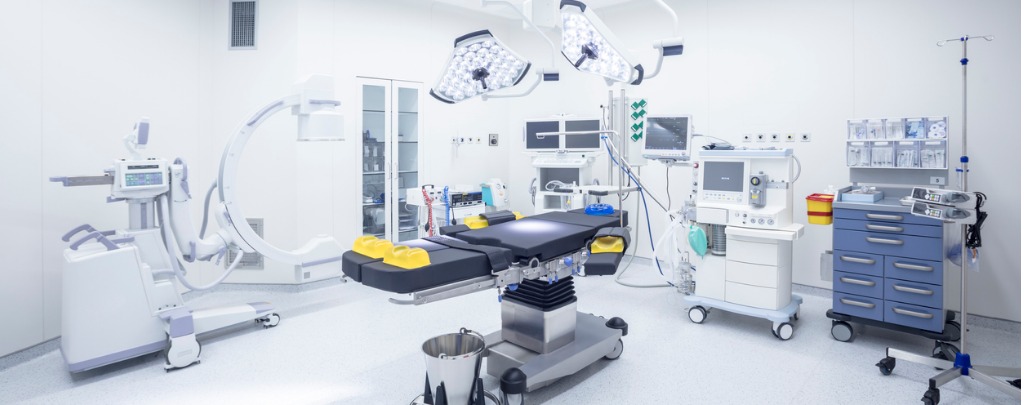
The medical industry demands components that meet the highest standards of precision, cleanliness, and reliability. Surgical instruments, diagnostic equipment, laboratory devices, and patient care hardware must perform consistently and safely in environments where failure is simply not an option. Materials must withstand repeated sterilization cycles, resist corrosion from body fluids and cleaning chemicals, and maintain dimensional accuracy across years of demanding use.
Investment casting has served the medical industry for decades, providing the combination of geometric complexity, tight tolerances, excellent surface finish, and broad material capability that medical equipment and instrument manufacturers require. The lost wax process is uniquely suited to medical applications — it produces near-net shape components with surface finishes of 125 RMS or better in the as-cast condition, minimizing secondary machining while maintaining the dimensional precision and material integrity that medical components demand.
Engineered Precision Casting Company has extensive experience producing precision investment castings for medical equipment and instrument applications. We are AS9100 registered and NADCAP approved for nondestructive testing, welding, heat treating, and hardness testing, providing the quality infrastructure and documentation capabilities that medical programs require. Our focus is on surgical instruments, diagnostic and laboratory equipment, and medical device hardware.
Why Investment Casting for Medical Equipment?
Medical equipment and instrument manufacturers choose investment casting for several compelling reasons that align directly with the demands of healthcare applications:
Precision and repeatability — Investment castings achieve tolerances of ±.005 inches per inch in the as-cast condition, producing components that fit and function consistently from part to part. For surgical instruments where precise fit between mating components determines cutting performance, clamping force, or fluid control, this level of consistency is essential.
Surface finish — The lost wax process produces surface finishes of 125 RMS or better without secondary finishing, which is important for medical components that must be cleanable, sterilizable, and resistant to bacterial adhesion. Critical surfaces such as instrument jaws, cutting edges, and sealing faces can often be finished directly from the as-cast surface with minimal additional processing.
Complex geometry — Medical instruments and equipment housings frequently incorporate complex internal passages, thin walls, undercuts, and intricate external contours that would be prohibitively expensive to produce by machining alone. Investment casting produces these features in a single operation, enabling designers to optimize instrument geometry for ergonomics, function, and ease of cleaning without being constrained by machining limitations.
Material versatility — Medical equipment applications span a wide range of material requirements, from the high corrosion resistance of austenitic stainless steel for general instrument service to the high strength of precipitation hardening grades for surgical power tool components. Investment casting is compatible with all of the stainless steel grades most commonly specified for medical applications.
Sterilization compatibility — Investment cast stainless steel components withstand all common sterilization methods including steam autoclave, ethylene oxide, gamma irradiation, and chemical disinfection without dimensional change or surface degradation. The dense, homogeneous microstructure produced by investment casting resists corrosion from the repeated chemical exposure inherent in instrument reprocessing.
Part consolidation — Complex surgical instruments that would otherwise require multiple machined components joined by welding or mechanical fastening can often be produced as a single investment casting, eliminating joints and fasteners that can harbor bacteria, complicate cleaning, and introduce assembly variation into critical functional relationships.
Medical Applications
Investment castings are found throughout the medical equipment industry, from operating room instruments to laboratory diagnostic equipment and patient care hardware.
Surgical Instruments
Surgical instruments represent the largest and most technically demanding category of medical investment castings. Forceps, clamps, retractors, needle holders, scissors, specula, and tissue graspers are all commonly produced as investment castings, taking advantage of the process's ability to produce complex jaw geometries, box locks, and ring handles to precise dimensions in a single operation.
Austenitic stainless steel grades — particularly 316-L — are the standard material for general surgical instrument castings, providing the combination of corrosion resistance, weldability, and biocompatibility required for instruments that will be repeatedly sterilized and used in contact with body fluids. For instruments requiring higher strength or hardness — such as needle holders, wire cutters, and bone-cutting forceps — martensitic grades including 410 and 420C are specified, allowing the instrument to be heat treated to the hardness required for edge retention and spring performance. Precipitation hardening stainless steels, particularly 17-4 PH, are specified for the most demanding surgical instrument applications where high strength, good corrosion resistance, and dimensional stability during heat treatment must all be achieved simultaneously.
The investment casting process is particularly valuable for producing the complex box lock mechanisms and jaw geometries of ratcheting surgical instruments, where the precise dimensional relationships between mating parts determine the instrument's clamping force, alignment, and tactile feedback. These features, which would require multiple machining operations if produced from bar stock, are produced to near-net shape in a single casting operation.
Surgical Power Tools and Handpieces
Surgical power tools — including drills, saws, reamers, and irrigation systems used in orthopedic, neurosurgical, and general surgery — incorporate investment cast housings, end caps, trigger mechanisms, and fluid manifolds that must combine ergonomic external geometry with complex internal features for fluid routing and mechanism support.
Precipitation hardening stainless steel grades including 17-4 PH and 15-5 PH are the primary materials for surgical power tool housings, providing high strength and good corrosion resistance in components that must withstand both the mechanical demands of repeated use and the chemical demands of autoclave sterilization. The ability to produce complex external contours and internal fluid passages in a single casting — rather than machining from solid billet or assembling multiple machined components — is a significant advantage of investment casting for this application category.
Endoscopic and Minimally Invasive Instruments
The growth of minimally invasive surgery has driven demand for increasingly sophisticated endoscopic instruments that must combine small cross-sections with complex internal mechanisms and fluid passages. Investment castings are used for endoscope distal tips, instrument channel components, biopsy forceps jaws, clip applier mechanisms, and stapler anvil components — applications where the geometric complexity achievable through investment casting is essential to produce functional components at the scale required by minimally invasive procedures.
316-L stainless steel is the standard material for endoscopic instrument castings, providing the corrosion resistance required for components that operate in close proximity to body fluids and must withstand aggressive chemical disinfection between uses. The smooth surface finish achievable in the as-cast condition is particularly important for endoscopic components where surface roughness can harbor contaminants that are difficult to remove during instrument reprocessing.
Sterilization Equipment
Autoclaves, sterilization trays, instrument cassettes, and washer-disinfector components are produced as investment castings in austenitic stainless steel for their excellent resistance to the high-temperature steam and chemical environments of instrument reprocessing. Investment cast sterilization tray frames and instrument holders must maintain their dimensional integrity through thousands of autoclave cycles at temperatures exceeding 270°F and pressures above 30 PSI, while resisting corrosion from the alkaline cleaning agents used in automated washer-disinfectors.
316-L and 304 stainless steel investment castings are commonly specified for sterilization equipment components, providing reliable corrosion resistance in hot steam and chemical environments. The investment casting process is particularly well suited to producing the complex tray geometries and instrument retention features that allow efficient loading and sterilant penetration while securely retaining instruments throughout the sterilization cycle.
Diagnostic and Laboratory Equipment
Laboratory diagnostic equipment, imaging systems, and patient monitoring hardware incorporate investment castings for structural housings, mechanism components, and fluid handling hardware where complex geometry, dimensional precision, and corrosion resistance are required. Stainless steel investment castings are used extensively in laboratory centrifuges, spectroscopy equipment, fluid handling systems, and automated diagnostic platforms for their combination of corrosion resistance, cleanability, and dimensional stability.
For diagnostic imaging equipment — including components of X-ray, CT, and MRI systems — investment castings in austenitic stainless steel provide the non-magnetic properties, dimensional precision, and surface finish required for components operating in proximity to sensitive imaging detectors. The ability to produce complex housings and mechanism components as single investment castings, rather than fabricating from multiple machined and welded parts, reduces assembly complexity and improves dimensional consistency in precision imaging equipment.
Patient Care and Operating Room Equipment
Operating room tables, surgical lighting systems, patient positioning equipment, and fluid management systems all incorporate investment cast components in stainless steel for their combination of strength, corrosion resistance, and cleanability. Cast components in these applications must withstand the physical demands of repeated adjustment and repositioning, the chemical demands of hospital-grade disinfectants, and the aesthetic demands of a clinical environment — all requirements that stainless steel investment castings meet reliably.
Investment cast stainless steel components for operating room equipment benefit from the process's ability to produce smooth, crevice-free external surfaces that can be easily cleaned and disinfected, reducing the risk of cross-contamination between procedures. The dimensional consistency of investment castings is also important for operating room equipment where interchangeable accessories must fit and lock securely regardless of which specific casting they are matched with.
Dental Equipment and Instruments
Dental instruments, handpieces, and equipment components are produced as investment castings in stainless steel and cobalt-base alloys for their combination of hardness, corrosion resistance, and biocompatibility. Dental scalers, curettes, explorers, and extraction forceps are investment cast in martensitic and precipitation hardening stainless steels, taking advantage of the process's ability to produce complex instrument tip geometries and handle profiles to precise dimensions. Cobalt-base alloy investment castings — particularly Cobalt #6 — are specified for dental instrument tips and cutting edges where maximum hardness and wear resistance are required to maintain sharpness through repeated use and sterilization.
Material Selection for Medical Investment Castings
The selection of the appropriate stainless steel grade for medical investment castings is driven by the specific combination of strength, corrosion resistance, hardness, and heat treatment requirements of each application.
316-L is the standard material for general medical instrument and equipment castings. Its low carbon content prevents sensitization during sterilization and welding, and its molybdenum addition provides good resistance to pitting and crevice corrosion from body fluids and cleaning chemicals. It is the default choice for most surgical instrument, endoscopic component, and equipment housing applications where extreme strength or hardness is not required.
410 and 420C are martensitic stainless steels used where hardness and edge retention are required — primarily for cutting instruments, needle holders, and other instruments where a heat-treated hardness of RC 45–55 is needed for functional performance. Their corrosion resistance is lower than austenitic grades, making proper cleaning and drying protocols important to prevent surface staining and corrosion in reprocessing.
17-4 PH and 15-5 PH are the preferred grades where high strength must be combined with good corrosion resistance in a single material. They are specified for surgical power tool housings, complex instrument assemblies, and structural equipment components where austenitic grades cannot meet the strength requirements and martensitic grades cannot meet the corrosion requirements. The ability to age harden these alloys at relatively low temperatures with minimal dimensional change is a significant advantage for precision instrument components that must maintain close tolerances after heat treatment.
Cobalt #6 is specified for dental and surgical instrument cutting edges and wear surfaces where maximum hardness and wear resistance are required. Its investment casting in complex tip and jaw geometries allows the hard, difficult-to-machine cobalt alloy to be produced close to final dimensions, minimizing grinding and finishing operations.
Quality and Documentation
Medical equipment investment castings are produced under the rigorous quality management requirements of the healthcare industry. Engineered Precision Casting Company holds AS9100 registration covering the design, development, and production of investment castings, with NADCAP approvals for nondestructive testing, welding, heat treating, and hardness testing.
All castings are produced with full material traceability from raw material to finished part, with documentation packages available including chemical certifications, mechanical test reports, dimensional inspection reports, and nondestructive testing results. Our master heat system provides strict chemical control across all pours, ensuring consistent material properties from lot to lot — a critical requirement for medical equipment manufacturers who must validate their processes and demonstrate material consistency to regulatory bodies.
Contact us to discuss your medical equipment casting requirements, request a quote, or discuss material selection for your application.

AS9100 Registered Aerospace Quality System. NADCAP approved for Nondestructive Testing, Welding, Heat Treating and Hardness Testing